




Education stakeholders in Oyo State have raised alarm over what they described as a deepening basic education crisis, warning that despite recent government interventions and funding commitments, hundreds of thousands of children remain excluded from schooling while infrastructure deficits continued to undermine learning outcomes.
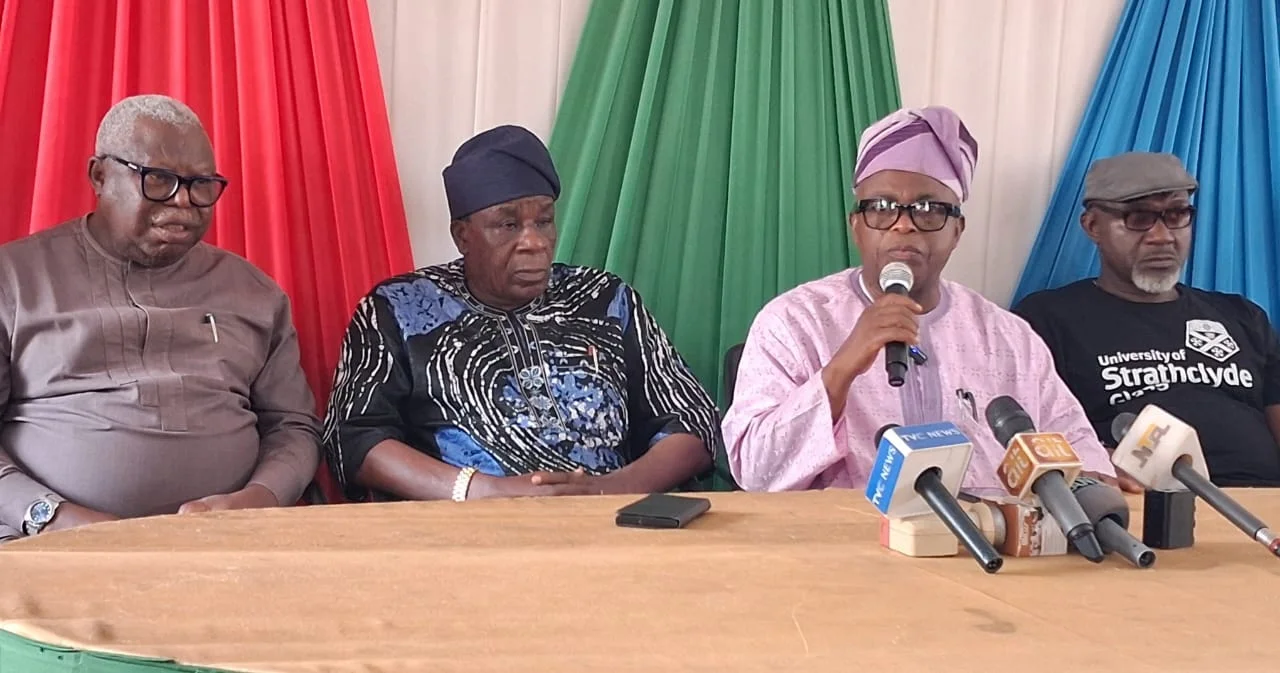
Speaking at a stakeholders’ engagement in Ibadan, organised by Educare Trust and the Civil Society Action Coalition on Education for All (CSACEFA), the Programme Director of Educare Trust, Folorunsho Moshood, said the state presented a troubling paradox of progress and persistent systemic failure.
“Oyo State has made strides in expanding access to basic education and modernising classrooms, yet faces a learning crisis and high exclusion rates,” he said, stressing that “these challenges require urgent, coordinated national and sub-national responses.”
According to data from the 2022/2023 Annual School Census, Oyo State has one of the largest student populations in South-West Nigeria, second only to Lagos, with over two million pupils in public primary schools alone.
However, stakeholders warned that this scale has not translated into inclusive education, as the state still records the highest number of out-of-school children in the region.
Moshood cited figures indicating that about 20.1 per cent of children aged 3 to 17 in the state, approximately 674,324—are out of school.
“This is not just a state concern; it is a national emergency. The drivers — poverty, distance, hidden costs and lack of interest—reflect structural issues that require stronger policy enforcement and social protection measures,” he said.
He added that while the government recently announced that 60,000 children had been returned to classrooms, the figure represents only a fraction of those still excluded.
“We must not celebrate marginal gains when the scale of the problem remains overwhelming,” he said.
On infrastructure, stakeholders described conditions in many public schools as inadequate and detrimental to effective teaching and learning.
Quoting from official findings, Moshood noted that “due to inadequate number of usable classrooms, toilets and WASH facilities, the state needs to pay more attention to infrastructural development in public schools,” adding that “a huge percentage of schools still lack basic amenities, hindering effective teaching and learning processes.”
He further observed that most schools lack functional libraries and adequate sporting facilities, factors he said, contribute significantly to weak learning outcomes.
“When the environment is not conducive, learning cannot thrive. This is a fundamental issue of quality, not just access,” he stated.
Despite improvements in teacher-pupil ratios, concerns were also raised about uneven teacher distribution, particularly in rural areas.
“Qualified teachers are reluctant to accept postings to underserved communities, leaving rural pupils at a significant disadvantage,” Moshood said.
He also highlighted gaps in special education, noting that “special needs schools are grossly inadequate, and those that exist lack specialised teachers and facilities.”
While acknowledging government efforts, including the payment of over N3.5 billion in counterpart funding to access Universal Basic Education Commission grants, stakeholders insisted that funding must translate into measurable outcomes.
“The availability of funds must be matched with transparency, efficiency and impact at the classroom level,” Moshood emphasised.
a’s future. Anything less risks deepening inequality and weakening the nation’s human capital development.”